
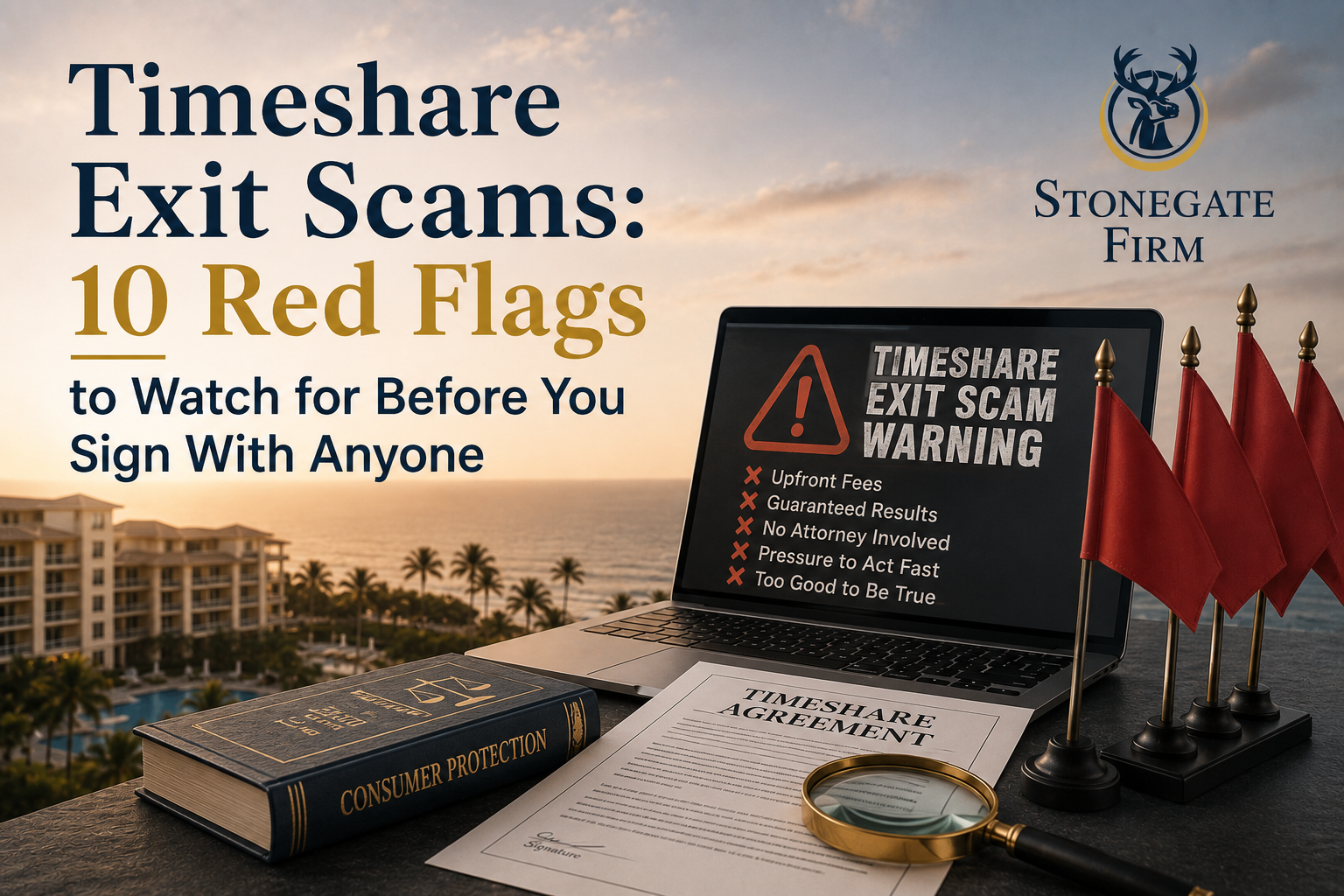
Timeshare Exit Scams: 10 Red Flags to Watch for Before You Sign With Anyone
Timeshare exit scams aren’t a hypothetical risk. In 2022, the FTC and the Wisconsin Attorney General sued a company operating under names including Square One and Consumer Law Protection for defrauding consumers, mostly older adults, out of more than $90 million. In April 2026, a federal court ordered one of its operators to pay $140 million in redress and penalties and permanently banned him from the industry. This guide covers the actual warning signs regulators say to watch for, based on that case and others like it.
This article is general information, not legal advice, and does not name or accuse any specific company other than those already named in public FTC and DOJ filings.
How the Real Cases Actually Worked
According to the FTC’s complaint, the Square One scheme used direct mail and in-person seminars to pressure older adults into paying, falsely claimed affiliation with legitimate timeshare companies, told consumers they couldn’t exit on their own, and denied nearly every refund request under a “guarantee” that was never honored. A separate FTC consumer alert describes exit companies charging $5,000 to $80,000 while rarely delivering. These aren’t edge cases, they’re the pattern regulators have documented repeatedly.
The 10 Warning Signs
- A guarantee of cancellation before anyone has reviewed your actual contract.
- Pressure to pay the full fee upfront, with no milestones tied to progress.
- Instructions to stop paying your resort immediately, before any legal strategy has been discussed.
- Unsolicited contact, cold calls, mailers, or seminar invitations you didn’t request.
- False claims of affiliation with your specific resort or a trade association.
- Vague answers about who is actually working your case, an attorney, a case manager, or a third party.
- No verifiable business address, or one that doesn’t match state business registration records.
- Refusal to put fee structures or a refund policy in writing.
- High-pressure sales tactics during the call meant to help you escape high-pressure sales tactics.
- A “refund guarantee” that, when tested, gets denied for reasons that shift each time you ask.
What to Do Before You Sign Anything
- Search the company’s name alongside the words “scam” or “complaint.”
- Check the Better Business Bureau and your state Attorney General’s complaint database.
- Confirm business registration through your state’s Secretary of State office.
- Ask directly whether an attorney, by name, reviews and negotiates your case.
You can see how our attorney is directly involved in every case on our attorney page.
What to Do If You’ve Already Paid a Scam Company
- Stop any further payments immediately.
- Dispute the charge with your bank or credit card company if the payment is recent.
- Report it to the FTC at ReportFraud.ftc.gov and to your state Attorney General.
- File a report with the FBI’s Internet Crime Complaint Center at ic3.gov if the contact was unsolicited.
The FTC’s own consumer alert on this exact topic is worth reading directly: https://consumer.ftc.gov/consumer-alerts/2022/11/want-get-rid-your-timeshare-read-you-hire-someone-help
Frequently Asked Questions
Are all timeshare exit companies scams? No. Legitimate attorney-led firms exist. The red flags above, not the existence of a fee, are what to watch for.
How much have people actually lost to these scams? The FTC’s Wisconsin case alone involved more than $90 million in documented consumer losses, with a $140 million judgment issued against one operator in 2026.
What if a company already promised a refund and won’t pay? Document every communication, then file complaints with the FTC and your state Attorney General; both track these patterns for enforcement action.
If you’d like your situation reviewed by someone who can verify credentials and answer questions directly, you can request a case review.